


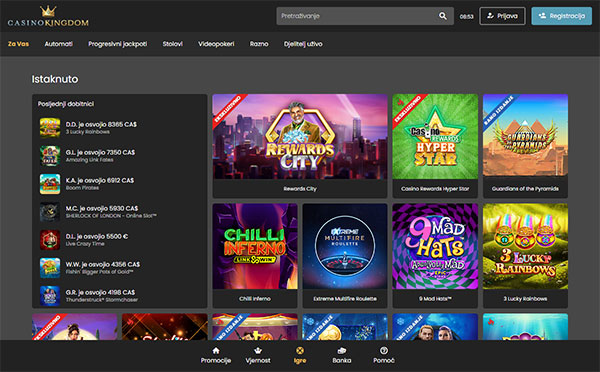
Stepping into the world of online gaming provides excitement and entertainment, but it also entails a responsibility that every player should understand from the very first session. Player protection is not merely a set of rules enforced by platforms like Casino Kingdom; it is a comprehensive framework designed to preserve the joy of gaming while safeguarding individuals from the potential harms that can arise when recreation crosses into compulsion. For newcomers, the landscape of responsible gambling tools can feel complex, yet mastering these mechanisms early transforms a casual pastime into a sustainable, controlled leisure activity. This guide explains the core pillars of player protection, detailing how deposit limits, reality checks, self-exclusion, and access to professional support establish a safety net that empowers players to maintain command over their time and money. Understanding these principles ensures that gaming remains exactly what it should be, a form of recreation rather than a source of stress.
Comprehending the Philosophy of Responsible Gaming
Controlled gaming relies on a basic principle that gambling should be approached as a paid entertainment service, not a financial strategy or a solution to personal issues. This philosophy accepts that the mathematical house edge means losses are the expected cost of the activity, much like purchasing a ticket to a concert or a sporting event. When newcomers embrace this perspective, they naturally gravitate toward setting predefined spending limits and regarding any wins as an surprising bonus rather than a goal. Casino Kingdom and similar platforms embed this philosophy into their operational DNA by providing transparent information about game mechanics, return-to-player percentages, and the random nature of outcomes. The industry’s shift toward proactive player education demonstrates a broader understanding that an informed player is an empowered player. By accepting that chance governs every spin, hand, or roll, individuals can detach emotional well-being from short-term results and concentrate on the entertainment value of the play itself. This mental framework is the bedrock upon which all other protective tools are built.
The psychological dimension of responsible gaming extends beyond simple budgeting into the sphere of emotional self-awareness. Players who game responsibly identify the warning signs that their behavior is shifting from recreational to problematic, such as feeling irritable when unable to play, chasing losses with larger bets, or masking the degree of their activity from loved ones. The philosophy promotes honest self-assessment without guilt, framing these signals as important feedback rather than personal failings. Operators devoted to player protection build their platforms to enable this self-reflection, offering session history reviews, expenditure summaries, and gentle prompts that encourage periodic breaks. The goal is not to diminish the exhilaration of gaming but to ensure that rush never becomes a compulsion that overrides rational decision-making. When a new player embraces this philosophy from day one, they develop a healthy relationship with gambling that can remain steady for years, treating each session as a discrete entertainment expense with clear boundaries that protect both their financial health and their psychological well-being.
Establishing Deposit Limits as a Initial Line of Defense
Deposit limits represent the most immediate and effective tool a newcomer can employ to maintain financial control over their gaming activity. These customizable caps restrict the quantity of cash a player can deposit into their account over a set period, usually daily, weekly, or monthly. The effectiveness of deposit limits lies in their upfront nature; a player chooses the limit with a sober mind before any gaming session commences, eliminating the chance of impulsive decisions made in the midst of the moment. When a limit is hit, the system automatically stops further deposits until the allotted period resets, generating a cooling-off break that halts any potential spiral of chasing losses. For someone just beginning their journey, setting conservative deposit limits right away establishes a financial barrier that makes excessive spending systematically impossible. The act of setting these limits also encourages a worthwhile moment of thought, asking the player to frankly determine what they can comfortably afford to lose without impacting essential expenses like rent, bills, or savings goals.
The actual implementation of deposit limits at Casino Kingdom entails navigating to the regulated gambling section of the account interface, where adjustable bars and input fields permit precise adjustment over the selected thresholds. Newcomers should understand that decreasing a limit typically applies immediately, ensuring immediate protection, while requests to raise limits often contain a mandatory cooling-off time of twenty-four hours or more. This intentionally unbalanced design is purposeful, stopping a player from rashly upping their cap during a moment of annoyance or rashness. Experienced responsible gaming experts advise beginning with a weekly limit that amounts to no more than one to two percent of disposable monthly income, then adjusting downward if that amount ever feels uncomfortable to lose. The key takeaway for newcomers is that deposit limits are not a indication of frailty or lack of trust in one’s own discipline; they are a forward-thinking, wise strategy that resembles how sensible individuals create budgets for any leisure activity. By making automatic financial restrictions, players release their mental focus to appreciate the games themselves without the background concern of potential overspending.
Establishing a Sustained Sustainable Gaming Approach
Healthy gaming is not realized through a solitary decision but through the continuous application of habits and attitudes that hold the activity in its proper place within a balanced life. The cornerstone of this mindset is a explicit, written personal gaming policy that outlines the player’s boundaries regarding time, money, and emotional engagement. This document, which can be as simple as a note on a phone or a journal entry, serves as a contract with oneself that can be returned to during moments of temptation. The policy might specify maximum weekly deposits, the number of sessions per week, and a commitment to never gamble when experiencing negative emotions such as anger, loneliness, or despair. By formalizing these commitments, the player creates an objective standard against which their behavior can be evaluated, reducing reliance on subjective judgment that can become impaired in the moment. The act of writing also underscores the seriousness of the commitment, converting vague intentions into concrete guidelines with psychological weight.
Beyond formal limits, Casino Kingdom jeu sécurisé, a sustainable mindset includes regular periods of complete abstinence from gaming, making space to assess whether the activity remains a positive presence. These planned breaks, perhaps a week or a month without logging in, serve as diagnostic tests that uncover the true nature of the player’s attachment. consulter cette page If a week without gaming feels like a refreshing reset, the relationship is likely healthy; if it elicits intense craving or irritability, that reaction itself is valuable information justifying closer examination. The sustainable player also varies their sources of leisure and fulfillment, ensuring that gaming is one thread in a diverse fabric of hobbies, social connections, physical activity, and creative pursuits. When gambling becomes the only or primary source of excitement, its psychological grip tightens simply because there is nothing to balance it. Casino Kingdom’s responsible gambling framework encourages this diversification by encouraging players to view gaming as a secondary rather than central activity. The ultimate goal is a relationship with gambling that enhances life without ever threatening to overwhelm it, a balance that requires ongoing attention but compensates the effort with genuine, guilt-free enjoyment sustained over years rather than weeks.
Identifying Early Warning Signs of Problematic Play
Early intervention relies on recognizing the subtle behavioral and emotional shifts that indicate a transition from recreational gaming to problematic patterns. One of the earliest indicators is preoccupation, when thoughts about gambling begin to intrude on unrelated activities, work responsibilities, or social interactions. A newcomer might notice themselves mentally replaying past sessions, planning the next opportunity to play, or devising strategies to recover losses, all while ostensibly engaged in other aspects of life. Another warning sign is the gradual rise of bet sizes or deposit amounts, often justified by the belief that a bigger wager is needed to recapture the excitement of earlier experiences. This tolerance effect reflects patterns seen in substance use disorders, where the same stimulus produces diminishing returns over time, prompting increasingly risky behavior to achieve the desired emotional state. The player who once found fulfillment in modest stakes may discover that only higher-risk play delivers the same psychological payoff, a trajectory that can accelerate financial harm if left unexamined.

Additional warning signs show in the player’s emotional responses and interpersonal relationships. Irritability or restlessness when unable to gamble, commonly referred to as withdrawal, suggests that gaming has shifted from a voluntary pleasure to a compulsive need. Chasing losses, the practice of returning to play specifically to recover money lost in previous sessions, represents a particularly hazardous pattern because it transforms gambling from an entertainment expense into a perceived obligation. This mindset often leads to spending beyond predetermined limits and can trigger a destructive cycle where larger losses prompt more desperate attempts at recovery. Secrecy and deception also surface as red flags; a player who begins covering up the extent of their gaming from partners, family members, or friends is often aware at some level that their behavior has crossed a line. Other indicators include borrowing money to fund gaming, neglecting important responsibilities, or experiencing sleep disturbances related to gambling outcomes. Spotting these signs in oneself requires courage and honesty, but early acknowledgment opens the door to corrective action before consequences become severe.
Self-Assessment Instruments and Self-Evaluation Instruments
Reality checks function as a gentle but persistent mechanism that breaks through the immersive bubble of online gaming, pulling the player back to real-world focus at regular intervals. When activated, these notifications appear on screen displaying key information such as the total time spent in the current session, the overall monetary outcome, and a prompt asking whether the player chooses to continue, check their account history, or log out. The emotional influence of this pause is subtle yet profound. By requiring a conscious decision to continue, reality checks change what might otherwise be unthinking, unexamined behavior into a deliberate choice. For newcomers who are still calibrating their relationship with gaming, these prompts offer crucial moments of introspection that can prevent a casual session from morphing into an unplanned extended engagement. The data presented in reality checks also counteracts cognitive distortions, such as the tendency to recall wins more vividly than losses, by providing an bare numerical summary that cannot be rationalized away.
Accompanying automated reality checks are structured self-assessment questionnaires that invite players to analyze their gaming behavior through a professional lens. These tools typically present a series of statements, such as whether the player has ever borrowed money to gamble, had guilt about their gaming, or experienced conflict with family members over the time or money spent. The answers generate a risk profile that can vary from low-risk recreational play to signals pointing to the need for professional support. The worth of these assessments lies in their standardization; they use criteria aligned with diagnostic frameworks for gambling disorder, providing an impartial benchmark that pierces the denial and minimization that often come with problematic behavior. Casino Kingdom integrates these assessments as voluntary resources that players can access at any time, with results maintained confidential and used solely for the player’s own reflection. Newcomers are advised to complete a baseline self-assessment early in their gaming journey and revisit it periodically, creating a ongoing record that can expose gradual shifts in behavior that might otherwise go unnoticed until they become serious.
A Guide to Self-Exclusion
Self-exclusion programs is the most definitive protective measure accessible to players who recognize that a full hiatus from gaming is essential for their welfare. Once activated, this tool prevents access to the user’s account for a predetermined period, covering six months to five years or even permanently, depending on the jurisdiction and the individual’s decision. During the exclusion period, the operator ceases all marketing communications, suspends the account, and implements technical barriers that block the person from opening new accounts. The self-exclusion process at Casino Kingdom is crafted with a reflection period that stops rash activation followed by immediate regret; once requested, the restriction cannot be reversed until the complete duration has passed. This irreversibility is the tool’s main advantage, supplying an unbreakable external constraint that supports the user’s personal commitment during moments of weakness when the desire to resume may otherwise become unmanageable.
The decision to self-exclude is deeply personal and often arrives after a period of mounting concern about a person’s interaction with gambling. This tool acts not as a punishment but as a liberation, releasing the user from the constant fight of controlling cravings by removing the possibility of access entirely. For beginners who may not yet need such a severe action, understanding that self-exclusion is a convenient resource gives confidence that the safety net is robust. The practical steps include contacting customer support or utilizing an automated self-service portal if accessible, with identity verification ensuring that the exclusion is correctly tied to the person’s data. During the exclusion period, players are urged to pursue complementary support through counseling services or support groups, dealing with the fundamental issues that led to the need for a break. When the ban expires, reactivation is not immediate; the player must proactively request account reinstatement, which often leads to a compulsory assessment and an additional waiting period before access is restored. This deliberate, multi-step process makes sure that resuming activity is a thoughtful, intentional act rather than a default outcome.
Accessing Qualified Assistance and Counseling Resources
Whenever self-help tools fall short, a comprehensive ecosystem of professional support stands ready to assist individuals struggling with gambling-related harm. These resources span from confidential telephone helplines manned by trained counselors to face-to-face therapy programs that address the underlying psychological and behavioral patterns causing problematic play. Many jurisdictions have free, publicly funded services focused on problem gambling, ensuring that financial barriers do not block access to care. The counseling approaches used typically are based on cognitive-behavioral therapy frameworks, which assist individuals pinpoint and restructure the distorted thinking patterns that maintain compulsive gambling, such as the illusion of control or the gambler’s fallacy. Additionally, financial counseling services can aid in the practical aftermath of gambling losses, helping individuals create debt management strategies and restore financial stability. Casino Kingdom has connections with recognized support organizations and provides direct referral pathways for players who show interest in external assistance.
Peer support networks constitute another essential layer within the professional support framework, providing community-driven recovery through shared experience. Programs following twelve-step principles provide structured, anonymous environments where individuals can discuss their challenges without judgment and draw lessons from others who have faced similar challenges. The therapeutic value of these groups partially derives from the dissolution of isolation; many people with gambling problems feel uniquely defective or ashamed, and discovering a community of peers facing the same issues can be deeply reassuring. Online forums and chat-based support services extend this accessibility to those who may be reluctant to attend in-person meetings due to scheduling constraints, geographic limitations, or social anxiety. For family members affected by a loved one’s gambling, specialized support services address the unique emotional and financial toll of secondhand harm. The message for newcomers is clear: seeking help should not be seen as an admission of failure but rather a proactive measure toward reclaiming agency. The resources are in place, they are confidential, and they are structured to meet individuals wherever they are on the spectrum of concern, from mild unease to full-blown crisis.
The way Session Time Limits Safeguard Healthy Play Patterns
Clock, as much as money, is a important resource that can slip away unobserved during immersive gaming sessions. Session time limits respond to this reality by allowing players to set maximum durations for their logged-in activity, after which the platform automatically logs them out or presents a prominent notification prompting a break. The human brain’s capacity for focused decision-making deteriorates with extended concentration, a phenomenon well-documented in cognitive psychology. After roughly sixty to ninety minutes of continuous play, risk assessment becomes impaired, and the player may begin making choices they would reject when fresh and alert. Time limits break this cognitive decline at a predetermined point, compelling a reset that restores perspective. For newcomers who are still developing their internal clock for gaming sessions, these automated boundaries serve as an external conscience that prevents the transition from a brief, enjoyable diversion into a marathon session that leaves the player drained and potentially regretful.
Configuring session time limits requires honest self-appraisal about how gaming fits into a balanced lifestyle. A player who sets a sixty-minute limit and finds themselves repeatedly frustrated by the interruption may need to examine whether their expectations are realistic or whether gaming is beginning to occupy a disproportionate share of their leisure time. The most effective approach pairs time limits with reality check notifications, which are periodic pop-ups that display the current session duration and provide an opportunity to review wins, losses, and overall account activity. These gentle nudges resist the dissociative state that can accompany prolonged screen engagement, grounding the player in objective facts rather than the subjective flow of the game. Casino Kingdom’s implementation of these tools ensures that reality checks appear at customizable intervals, typically ranging from thirty to ninety minutes. Newcomers who embrace time management from the outset discover that shorter, more intentional sessions often yield greater satisfaction than extended periods of automatic, unexamined play. The quality of the gaming experience improves when bounded by clear temporal limits that preserve the activity’s freshness and prevent the fatigue that dulls enjoyment.
How Casino Kingdom Helps Your Protection Journey
Casino Kingdom has built player protection into the design of its platform, ensuring that responsible gambling tools are not hidden in obscure menus but presented prominently and accessibly. The account dashboard features a dedicated protection hub where deposit limits, session time caps, reality check frequencies, and self-exclusion options are all controlled through a unified interface designed for clarity. Each tool is accompanied by plain-language explanations that skip jargon, helping newcomers comprehend exactly what each setting does and how it will influence their experience. The platform also employs trained customer support representatives who can lead players through the configuration of protective measures, answer questions about responsible gambling policies, and enable referrals to external support organizations when appropriate. This human element ensures that players who may feel overwhelmed by self-service options have a compassionate, knowledgeable point of contact to assist them. The commitment extends to proactive monitoring systems that can flag unusual patterns of behavior, such as rapid deposit increases or extended late-night sessions, prompting a supportive outreach communication that monitors on the player’s well-being without being invasive or judgmental.
The technological infrastructure underpinning player protection at Casino Kingdom includes mandatory identity verification procedures that block underage access and verify that self-excluded individuals cannot circumvent their bans by creating new accounts. Encryption and data protection protocols shield the confidentiality of player information, including the details of any responsible gambling interactions, creating a safe space where individuals can find help without concern of exposure or stigma. The platform also adds to broader industry initiatives by sharing anonymized data on player protection outcomes and engaging in collaborative research efforts aimed at refining the effectiveness of responsible gambling interventions. For newcomers, this comprehensive approach means that protection is not an afterthought or a regulatory checkbox but a foundational design principle. From the moment an account is created, the tools and resources are available, waiting to be activated at the player’s discretion. The message is uniform and clear: Casino Kingdom views player protection not as a restriction on business but as an essential component of a sustainable entertainment ecosystem where customers can visit again and again, confident that their well-being is valued alongside their patronage.
FAQ
What distinguishes a deposit limit from a loss limit?
A deposit limit caps the total amount of money a player is able to move into their gaming account over a defined period, such as a day, week, or month. Once the threshold is reached, no more deposits are permitted until the period resets. A loss limit, where available, controls the net amount a player can lose from their deposited funds during a session or set timeframe, computed as deposits minus withdrawals. Deposit limits are more common and easier to implement, while loss limits provide more accurate control over actual financial outcomes. Both serve the same protective purpose but function on slightly different mechanisms.
Can I reverse a self-exclusion before the chosen period ends?
No, self-exclusion agreements are structured to be permanent for the duration of the specified term. This irreversibility is a intentional feature, not an mistake. When a player starts self-exclusion during a moment of clarity, the mechanism protects that decision against future impulses that might occur during moments of craving or distress. Attempts to circumvent the exclusion by creating new accounts are prevented by identity verification systems. If a player thinks the chosen exclusion period was too long, they must wait until it expires before requesting account reactivation, which itself involves a mandatory review and cooling-off period.
How exactly do reality checks function and am I able to set their frequency?
Reality checks are on-screen notifications that pop up at set times during a gaming session, displaying the current session duration, net financial result, and selections to continue, view account history, or log out. Players can typically customize the frequency of these notifications, picking intervals like every thirty, sixty, or ninety minutes. The default configuration is often sixty minutes. To change the frequency, navigate to the responsible gambling section of the account settings and select the chosen interval. These prompts act as deliberate interruptions that necessitate a conscious decision to continue playing, combating the automatic, unexamined behavior that can arise during extended sessions.
Are self-assessment tools private and who views the results?
Self-assessment questionnaires are confidential tools provided for the player’s personal introspection. The results are kept confidential with third parties, nor are they used by the platform to make automated decisions about the player’s account, like imposing restrictions without the player’s agreement. The primary purpose is to present an objective benchmark based on clinical criteria for gambling disorder, aiding individuals identify patterns that might need addressing. Some platforms may use anonymized, aggregated data from these assessments to enhance their responsible gambling programs, but individual responses are kept secret. Players can undertake these questionnaires as often as they wish without any external consequences.
What should I do if I observe warning signs in a friend or family member?
Approaching a loved one about potential gambling problems demands sensitivity and preparation. Choose a private, calm moment when nobody involved is stressed or distracted. Express concern using clear, non-judgmental observations about behavior changes you have noticed, such as greater secrecy around finances or mood swings connected with sporting events. Refrain from accusatory language and focus on your care for their well-being. Provide information about resources at hand, including helplines and counseling services, without demanding immediate action. Recognize that denial is common, and your role is to instill a thought of awareness while preserving the relationship. Help services for affected family members are also available and can offer guidance on navigating these difficult conversations.